
The Data Is In
Why the Kootenays Are Ready for More Film and Television Production
There’s something we’ve known for a long time here in the Kootenays: this region looks great on camera.
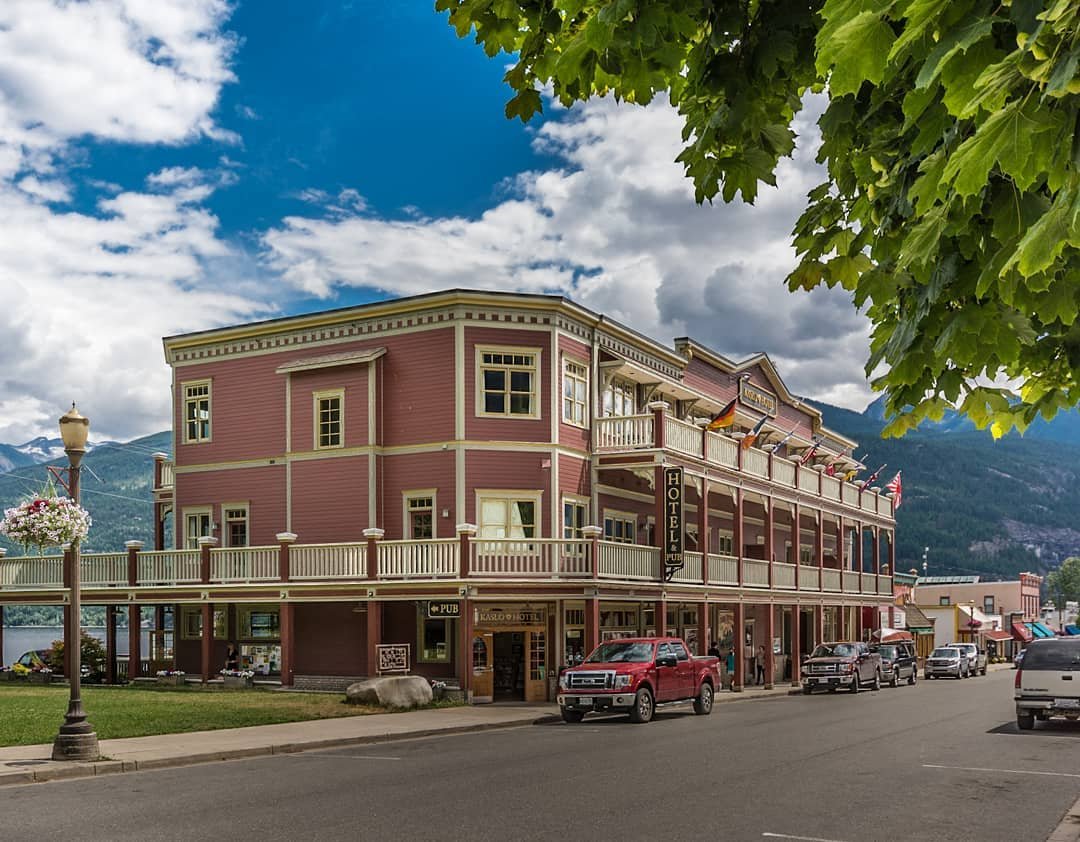
From our heritage towns and unique mountain communities to snowy mountains, deep lakes, forests, ski resorts, wildlife, and some truly spectacular landscapes, filmmakers have an incredible variety of locations to work with.
But the opportunity goes well beyond beautiful scenery.
In 2023, we took a closer look with the help of Community Futures, at what it would take to grow the Kootenays into a stronger regional film-production centre. The resulting report, Developing the Kootenay Regional Film Sector, examined the opportunities, challenges and economic benefits of attracting more film and television production to our part of British Columbia.
One of the clearest conclusions was this:
Film production can be good business for the Kootenays.
A Fernie Case Study: Hallmark’s Local Economic Impact
A great example came from Fernie.
In 2022, the Hallmark movie Love in Glacier National: A National Park Romance filmed in Fernie over a four-week period.
The production had a budget of almost $1.5 million — and $395,516 was spent directly in the local economy on location fees, local labour, food, accommodation and travel.
That’s nearly $400,000 circulating through a Kootenay community from just one relatively small television movie.
Film-Production Tax Credits and Incentives
There’s another important part of the equation: film-production tax credits.
Factoring in the applicable provincial and federal film-production tax credits, approximately $581,620 of the Fernie Hallmark production’s $1,483,740 budget was recovered through tax-credit incentives.
For producers considering the Kootenay Region, this is an important part of the financial picture. Depending on the production and its eligibility, projects filming in the region can potentially access combined provincial and federal film-production tax credits exceeding 40% of qualifying production costs.
That’s a significant incentive — and another compelling reason to bring film and television production to the Kootenays.
When those incentives are combined with the region’s competitive accommodation costs, experienced local crew base, spectacular locations, and growing production infrastructure, the Kootenays offer producers a strong financial case alongside the creative one.
These incentives help make Southeast British Columbia internationally competitive as a filming destination and make it more attractive for producers to consider regional communities like ours.
It creates an interesting economic equation: producers have access to significant incentives that help offset the cost of making a film in British Columbia, while a substantial portion of the production budget flows directly into the communities where filming takes place.
And those benefits spread well beyond the film crew.
Hotels and accommodation providers get bookings. Restaurants and caterers provide meals. Vehicles are rented. Local tradespeople are hired. Property owners receive location fees. Businesses supply materials and services. Municipalities receive film permit, business license, and engineering fees.
In other words, when a film production comes to town, quite a few people who don’t necessarily think of themselves as being part of the “film industry” can benefit from it.
We Already Have a Film Workforce
One of the first questions producers naturally ask when considering a regional location is:
“Is there an experienced crew available?”
Increasingly, the answer in the Kootenays is yes.
Our regional crew database now includes approximately 140 people with film-production experience, representing a mixture of union and non-union crew across a range of departments and skill levels.
That matters.
Every qualified crew member who can be hired locally reduces the number of people a production needs to bring in from Vancouver or elsewhere — which can mean lower travel, accommodation and per diem costs for the producer while keeping more production dollars circulating within our communities.
And when additional crew do need to come into the region, the Kootenays offer another important advantage: affordable accommodation.
Compared with major production centres, accommodation rates throughout much of the region can be very competitive, particularly during the shoulder seasons. Hotels, motels and other accommodation options can make housing a production crew considerably more economical.
Put those advantages together — experienced local crew, competitive accommodation, extraordinary locations and film-production tax incentives — and the business case for bringing production to the Kootenays becomes increasingly compelling.
Producers Are Willing to Look Beyond Vancouver
Our 2023 study also asked film producers and location managers what they thought about bringing more production to the Kootenays.
The results were encouraging.
95% of those surveyed said they would consider moving a film project outside the Lower Mainland if the conditions were right.
And when asked what mattered most when deciding where to film — after production costs — cinematographic production value ranked ahead of logistics.
That’s significant.
Because cinematographic production value is something the Kootenays have in abundance.
What we need to continue building are the other pieces that make production easier: experienced local crew, film-friendly communities, affordable accommodation, transportation, equipment, training opportunities and regional production infrastructure.
Building Jobs and Skills Here at Home
There’s another part of this opportunity that we find particularly exciting: workforce development.
Film production requires an enormous range of skills — construction, painting, set decorating, transportation, electrical, lighting, camera, sound, wardrobe, hair and makeup, accounting, administration, technology and many more.
Many of those skills already exist here.
The opportunity is to give local people the additional training and production experience they need to turn those skills into film-industry jobs.
Partnerships with educational institutions can help create training, micro-credentials and hands-on opportunities that allow people — particularly younger people — to build careers without necessarily having to leave the Kootenays to find them.
And there is a very practical cycle at work.
Every production that comes here gives local crew another opportunity to gain experience, build credits and develop their careers. That strengthens the crew base for the next production — and the one after that.
That’s how a regional film industry grows: one production, one job and one opportunity at a time.
Film Connects With the Rest of Our Economy
Film doesn’t exist in isolation.
One of the findings of our 2023 study was the potential for film production to create opportunities across other sectors of the Kootenay economy — including technology, arts and culture, tourism and hospitality.
A production may hire a carpenter one day, rent vehicles from a local company the next, book dozens of hotel rooms, purchase supplies, hire musicians or performers, employ technology specialists and introduce an international television audience to a Kootenay community.
That crossover is one of the things that makes film particularly interesting as a tool for rural economic diversification.
It can support businesses and workers who were already here while creating entirely new opportunities.
Investing in the Next Step
Our 2023 report also looked at something the Kootenay film sector was clearly missing: dedicated production infrastructure.
The specific circumstances and opportunities have evolved since that report was written, but the underlying idea has only become more relevant.
If we want more film and television production to come to the Kootenays, we need to continue investing in the infrastructure, technology, training and people that make it practical for producers to work here.
The Kootenays don’t need to become another Vancouver.
We have an opportunity to build something that fits who we are — a regional production centre that brings together extraordinary locations, talented people, technology, education, arts and culture, tourism and the unique character of our communities.
The scenery has always been here.
The crew base is growing.
The economics can work.
Kootenay Film Services has been working with Selkirk College and the City of Nelson to develop a film studio and production office creative hub that’s provides the necessary infrastructure producers look for.
And the industry is telling us that producers are willing to look beyond the Lower Mainland when the right pieces are in place.
The future of B.C. film can be regional — and the Kootenays are ready to play a bigger role.
Want to Dig Deeper?
Our 2023 report, Developing the Kootenay Regional Film Sector, takes a detailed look at the opportunities, challenges, economics, workforce requirements and infrastructure needed to grow film production throughout the region.
Ready to bring your next production to the Kootenays? Contact Kootenay Film Services today to explore locations, crew, incentives, and production infrastructure that can make your project a reality.